01
Galanthamine Analogs
Creating Galanthamine Analogs through Biosynthetic Engineering
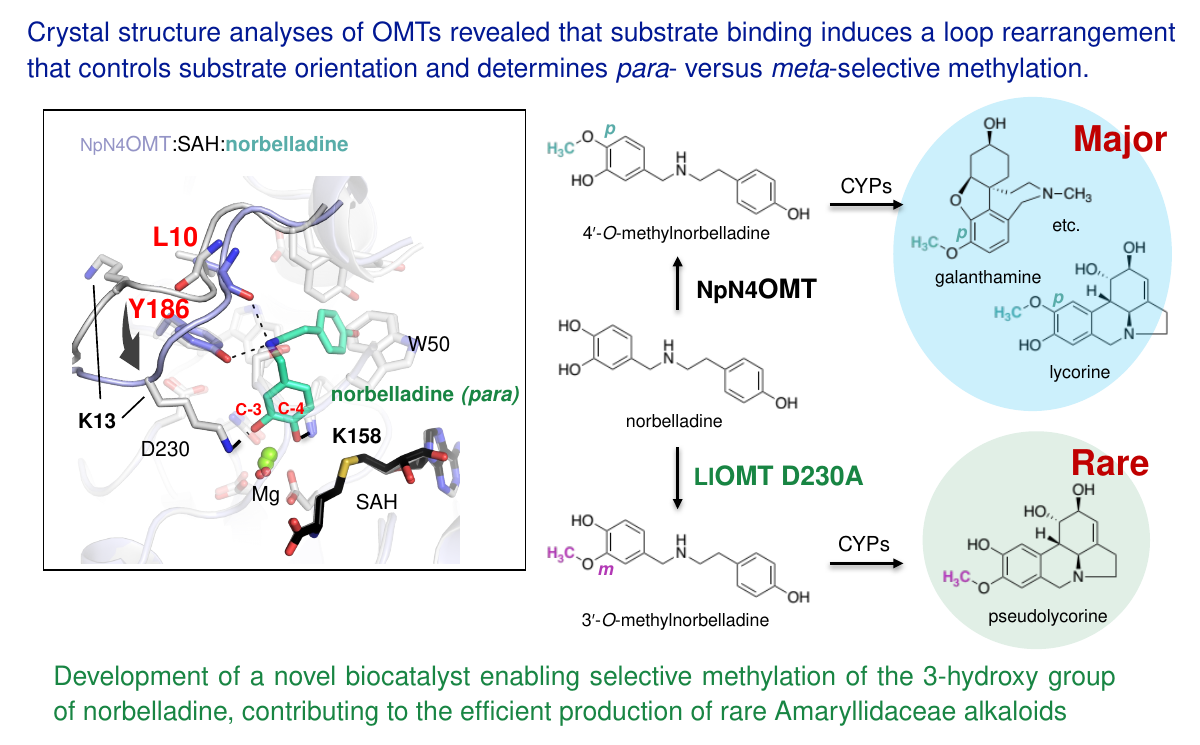
Galanthamine, a natural product from Amaryllidaceae plants, is used to treat Alzheimer’s disease. In addition to acetylcholinesterase inhibition, galanthamine has been reported to weakly promote neurogenesis and axonal regrowth. We aim to create analogs with enhanced activities related to neural recovery as a route toward new therapeutic leads for neurodegenerative diseases.
We therefore investigate the substrate and product specificities of biosynthetic enzymes for galanthamine and related Amaryllidaceae alkaloids, together with the molecular mechanisms that determine these properties. By combining substrate analogs with engineered enzymes, we seek to generate diverse non-natural galanthamine analogs and evaluate their biological activities to identify new leads aimed at restoring neural function.
02
Cannabinoid Analogs
Engineering Biosynthetic Enzymes to Create Cannabinoid Analogs
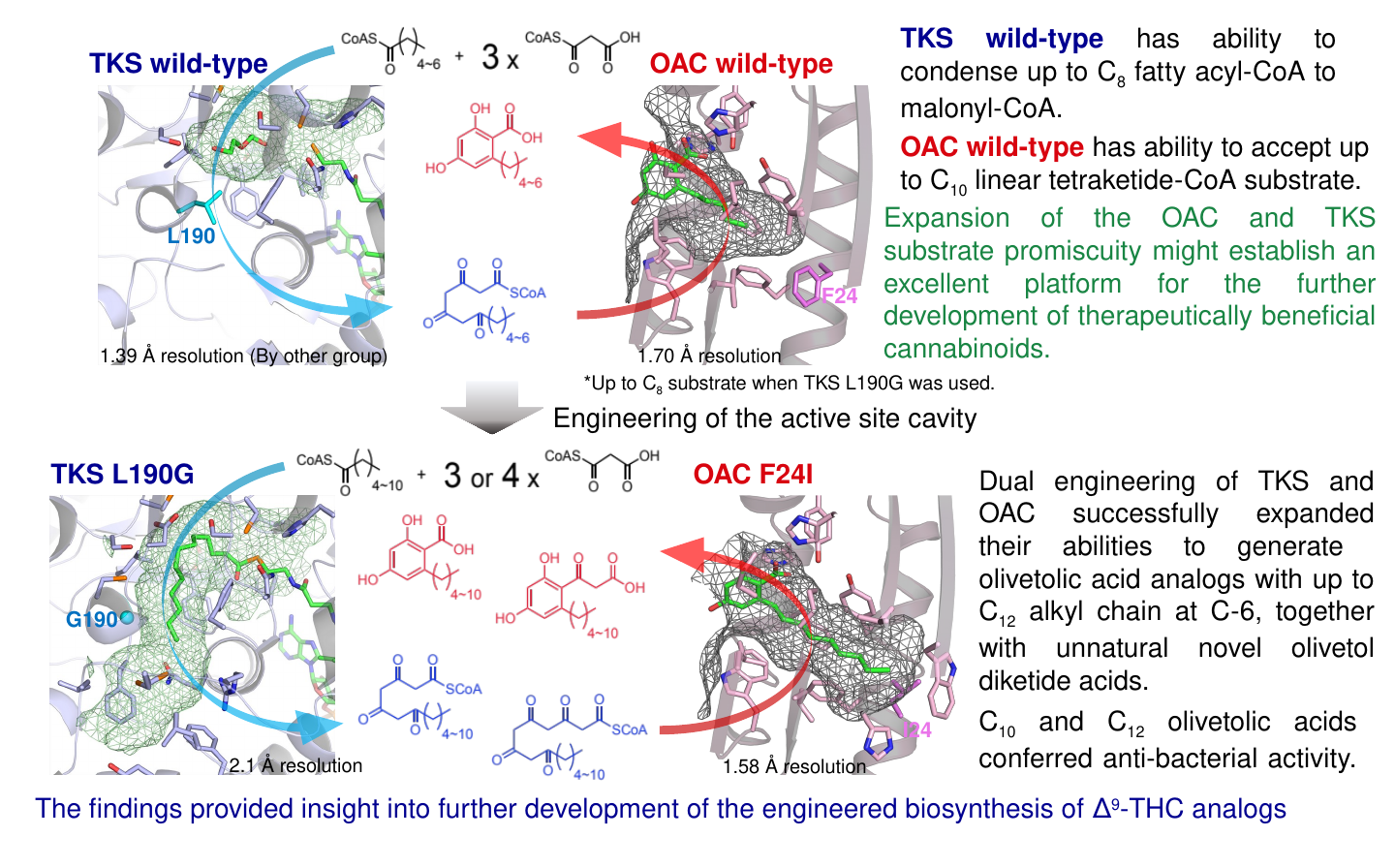
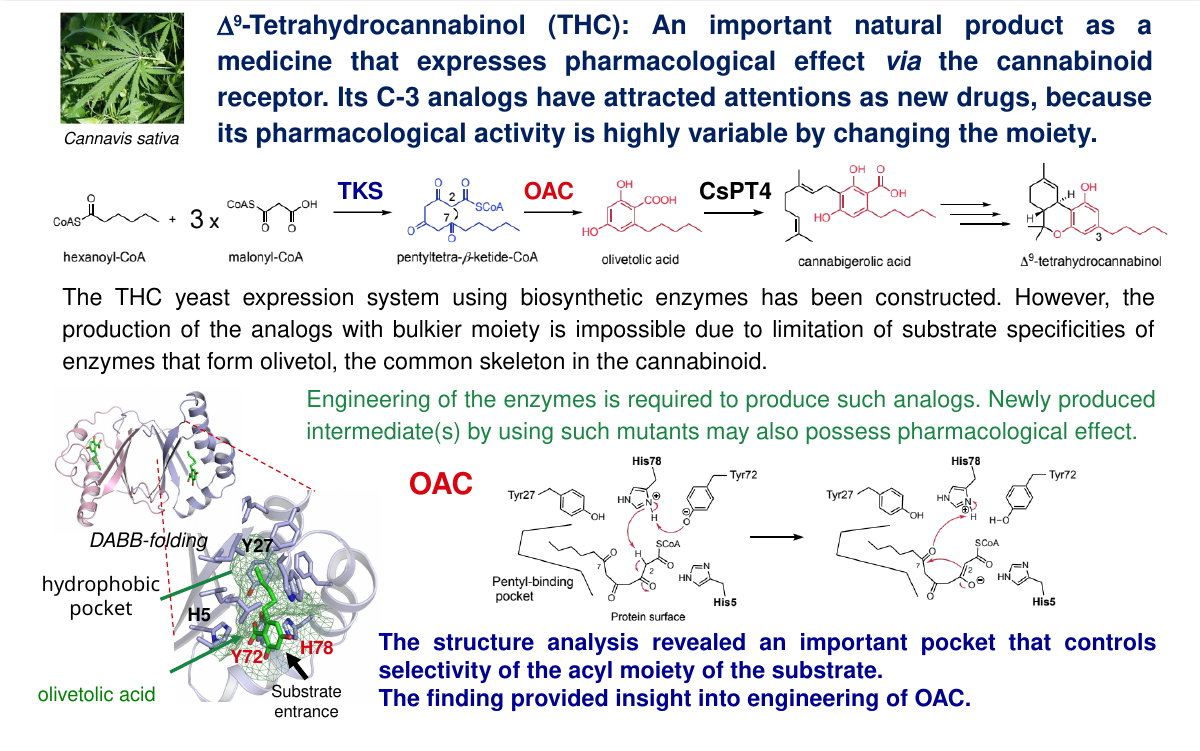
Plants produce diverse cannabinoids using a limited set of biosynthetic enzymes. Some cannabinoids show pharmacological activities of therapeutic interest, whereas psychoactive and other effects can limit their medical use. We investigate substrate recognition and reaction mechanisms of cannabinoid biosynthetic enzymes with the goal of controlling their functions.
By combining engineered biosynthetic enzymes with non-natural substrates, we seek to create cannabinoid analogs not found in nature, explore chemical space associated with new biological activities, and contribute to cannabinoid-based drug discovery with reduced psychoactive effects.
03
2OG Oxygenases
Discovery of Natural Inhibitors and High-Resolution Analysis of Inhibition
2-Oxoglutarate-dependent oxygenases (2OGXs) are an important enzyme family that regulates diverse biological processes, including hypoxic responses. Some 2OGXs are closely associated with disease. We search for new natural-product inhibitors of disease-relevant 2OGXs.
Through X-ray crystallographic analysis of enzyme–inhibitor complexes, we define inhibitor recognition and functional control at the atomic level and use these insights to guide the design of more selective inhibitors and drug-discovery leads.
04
Arsenic Natural Products
Biosynthetic Pathways of Arsenic-Containing Natural Products
Arsenic is a toxic element widely distributed in the environment. Some organisms adapt to arsenic-containing environments by converting inorganic arsenic into less toxic organoarsenic compounds. Although such organoarsenic production has mainly been studied from the perspective of detoxification, microorganisms have recently been found to possess biosynthetic pathways for organoarsenic natural products that are thought to serve roles distinct from detoxification.
We focus on a newly identified arsenate-initiated biosynthetic pathway in actinomycetes and investigate new organoarsenic natural products and the mechanisms underlying their biosynthesis. We also use these insights to create new organoarsenic natural-product analogs, with the aim of developing new leads for drug discovery and useful research reagents.
05
Anti-inflammatory Natural Products
Discovery of Anti-inflammatory Compounds from Natural Resources
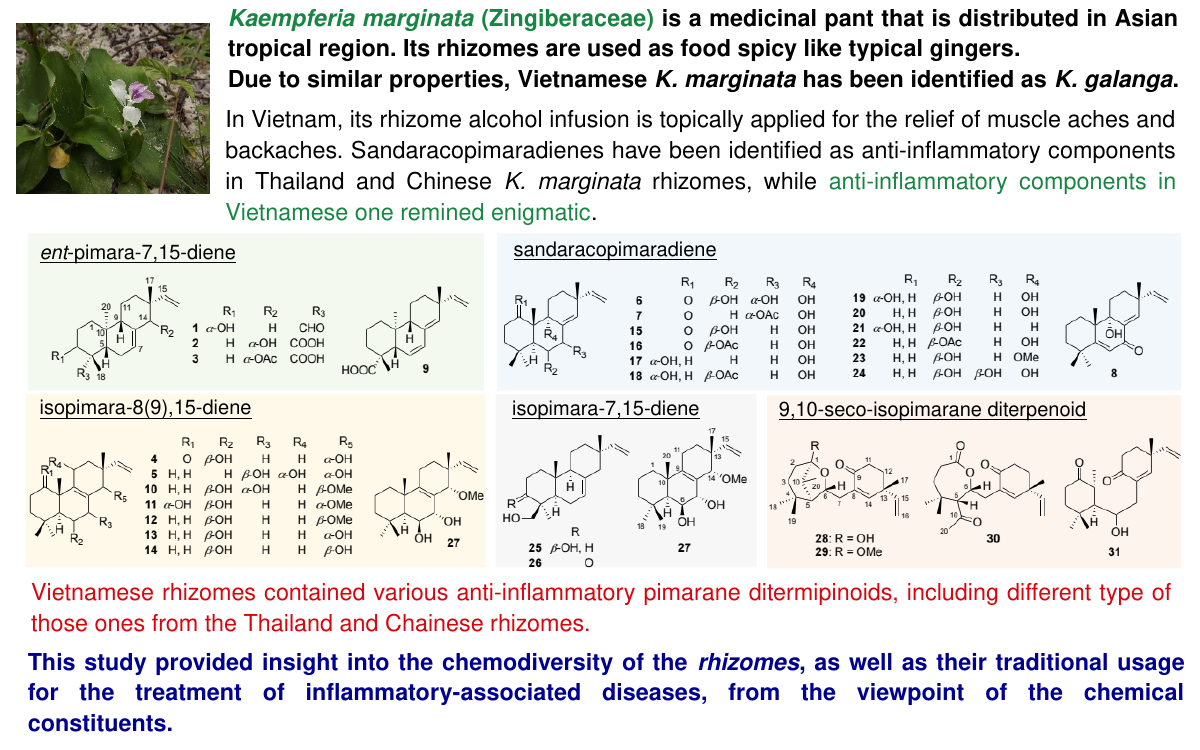
Inflammation is an essential defense response against infection and tissue injury, but excessive or chronic inflammation contributes to the onset and progression of many diseases. Chronic inflammation is associated not only with inflammatory disorders such as arthritis but also with age-related diseases including atherosclerosis, diabetes, cancer, and Alzheimer’s disease. Appropriate control of inflammation is therefore important for maintaining health and for disease prevention and treatment.
We focus on diverse natural resources, including medicinal plants traditionally used for inflammatory conditions, and search for anti-inflammatory natural products through isolation, structural elucidation, and biological analysis. By taking advantage of the structural diversity of natural products, we aim to identify active compounds with properties distinct from existing anti-inflammatory agents and develop new leads for inflammatory diseases.
06
Cage-type Carbazoles
Synthesis and Biological Evaluation of Cage-type Carbazoles
Distinctive three-dimensional architectures in natural products can strongly influence biological activity. Complex caged structures, such as those found in gambogic acid, are characteristic motifs associated with potent biological effects. In contrast, alkaloids with such caged architectures are rare, and the biological consequences of introducing a caged structure into an alkaloid scaffold remain largely unexplored.
We focus on carbazole, a representative alkaloid scaffold, and combine enzymatic reactions with organic synthesis to create new cage-type carbazoles not found in nature. We integrate in silico target exploration, biological evaluation, and X-ray crystallography to define molecular recognition and structure–activity relationships. These insights are used to develop derivatives with improved activity or selectivity and to explore distinctive three-dimensional structures as new drug-discovery leads.