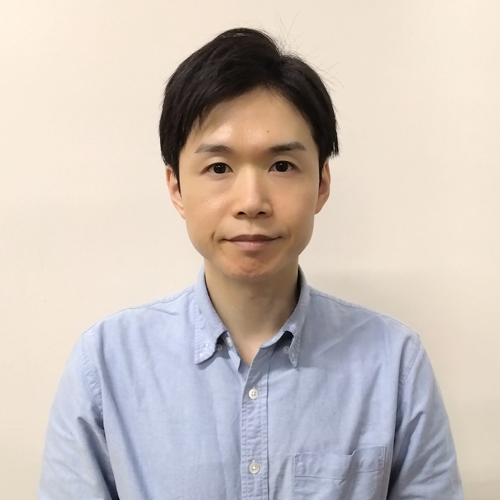
Shimizu Masahiro Assistant Professor
Shimizu Masahiro
AffiliationDivision of Presymptomatic Disease, Department of Research and Development
Research fieldsMolecular biology, Tumor biology
Campus careerPh.D.
Biography University of Toyama Faculty Research Profiles
Education
March, 2009 B.S. Department of Life Science, School of Agriculture, Meiji University, Japan.
March, 2011 M.S. Biomedical Science PhD Program, Tokyo Medical and Dental University, Japan.
March, 2014 Ph.D. Biomedical Science PhD Program, Tokyo Medical and Dental University, Japan.
Job career
April, 2014 Postdocoral Fellow, Institute for Advanced Medical Sciences, Nippon Medical School, Japan.
September, 2019 Assistant Professor, Medical Research Institute, Tokyo Medical and Dental University, Japan.
October, 2024 Assistant Professor, Medical Research Laboratory, Institute of Science Tokyo, Japan.
Research theme
Department
Division
Section
Project
Outline of the research
There are “tipping points” in our lives—moments when the course of events changes significantly. Recent research has shown that this concept also applies to the progression of cancer. In Japan, more than one million people are diagnosed with cancer each year, and it has remained the leading cause of death for decades. One of the major reasons for this is cancer metastasis, which represents a critical “tipping point” in the disease. My research focuses on cancer stem cells, which play a key role in this turning point. I aim to clarify how these cells function during the stage and to uncover the mechanisms of their involvement in metastasis. Furthermore, I hope to develop new strategies to prevent cancer metastasis by controlling their development and activity.
Thoughts on research
Cancer is a major health challenge not only in Japan but all around the world. Although treatments have advanced year by year, the number of cancer‑related deaths continues to rise. To change this situation, I believe it is essential to take the perspective of preventing cancer initiation and metastasis. I hope that my research will contribute to cancer prevention and early intervention, and ultimately help support healthier futures. I work every day with that goal in mind.
Paper
GSK3β regulates a novel β-Catenin degradation pathway via the GID complex in Wnt signaling.
Shimizu M and Shibuya H.
Genes to Cells, 6:e70068, 2025
WNK1/HSN2 mediates neurite outgrowth and differentiation via a OSR1/GSK3β-LHX8 pathway.
Shimizu M and Shibuya H.
Scientific reports, 12: Article number: 15858, 2022
Enhanced O-GlcNAc modification induced by the RAS/MAPK/CDK1 pathway is required for SOX2 protein expression and generation of cancer stem cells.
Shimizu M, Shibuya H and Tanaka N.
Scientific reports, 12: Article number: 2910, 2022
WNK regulates Wnt signalling and β-Catenin levels by interfering with the interaction between β-Catenin and GID.
Sato A, Shimizu M (Equal contribution), Goto T, Masuno H, Kagechika H, Tanaka N and Shibuya H.
Communications biology, 3: Article number: 666, 2020
IL-8-induced O-GlcNAc modification via GLUT3 and GFAT regulates cancer stem cell-like properties in colon and lung cancer cells.
Shimizu M and Tanaka N.
Oncogene. 38: 1520-1533, 2019
keyword
Tipping point、Cancer、Metastasis、Cancer stem cells